Author: ISOCARP Institute

Urban Prototyping in Georgian Limerick

Limerick’s Georgian Neighbourhood is developing flexibly and through the use of prototyping and community participation, in close cooperation with stakeholders: citizens, companies, city administration and researchers.

Supported by the European Horizon 2020 programme and as part of the +CityxChange Project, Limerick is employing smart city development by co-creation in a public-private-people partnership bringing benefits to all stakeholders. One of the elements of this smart city development is accelerating through agile piloting – ie, ‘Urban Prototyping’.

The Urban Prototyping programme accelerates Smart City innovation by procuring new urban products and service prototypes to be co-created with citizens and wider creative networks. Solutions are tested in real life settings during a period of up to 12 months. The programme supports pilot projects and offers tools to innovate, co-create and experiment with new programmes, initiatives & changes to regulation, products and services etc. together with citizens, makers, creatives, startups and other stakeholders.

From 2019 to 2021, there will be three open calls for urban prototypes, focused on enabling the formation of a Positive Energy District in the Georgian Neighbourhood of Limerick City.

These calls are supported by the Limerick CityEngage Weeks, during which citizens engage in developing a vision for living in the historic core of Limerick City Centre. Through workshops, mapping days and events in these CityEngage weeks, stakeholders explore ways to make the transition to a positive energy neighbourhood.

The first CityEngage week was held September 23rd to 28th, 2019 and focused on the ‘Georgian Laneways’ and ‘Citizen Sensing’. During that week the +CityxChange team supported and assisted citizens in gathering information about what is valued, and to share their ideas, hopes and aspirations for the Laneways. In April and September 2020, there are further CityEngage Weeks planned in Limerick.

This Open Call will identify and support the first Urban Prototypes to be tested in the Georgian Neighbourhood and focused on developing solutions for Laneways and Citizen Sensing supports. The open call is looking for teams involving local community groups, supported by designers and makers to design, create and test solutions to common issues in the Georgian Neighbourhood area. 

For more information on the Open Call, click here to download the original file. 

D2.3: Report on the Flexibility Market

The deliverable 2.3, Report on the Flexibility Market, was submitted by TrønderEnergi in December 2019. Following, the executive summary of the deliverable:

“This report, deliverable D2.3 of the +CityxChange project Task 2.6, describes a framework for how a local flexibility market (LFM) can be designed. In the context of the Positive Energy Blocks to be created within +CityxChange, LFMs provide market mechanisms to prevent grid congestion and aid with the integration of renewables. Because technological preconditions and objectives for LFMs can vary between locations, the +CityxChange project calls for a general design framework (tool) for how to proceed when considering an LFM in a given location. The report describes our approach to the design framework and applies it to +CityxChange lighthouse cities Trondheim (Norway) and Limerick (Ireland) as examples. The same general method may be used by other cities and locations.

The incentives for trade in LFMs may be implemented by distribution network operators (DNOs) or by local market operators (LMOs). As DNOs in Europe develop into Distribution System Operators (DSOs) they can become both market platform operators and/or buyers of flexibility in LFMs. While LMOs will not have system operation responsibilities, they may, through LFMs, provide services that are valuable to system operators and to those who wish to connect production or consumption to the grid.

The report makes a distinction between different forms of flexibility trading. First, LFM participants may sell flexibility services to an institution, like a DSO, LMO or aggregator. This principle is fairly well established. Second, in line with +CityxChange objectives, we also describe how participants could trade with each other, for purposes that are similar to the objectives of grid tariffs. This is referred to in the report as internal trading, and seems less explored until now. Internal trading generally requires that a DNO/DSO or LMO introduces new, special incentives, explicitly as or akin to special grid tariffs.

The LFM is envisaged to be built around a trading platform, which will be further developed in +CityxChange Tasks 2.3 and 2.5 (deliverables D2.6 and D2.7). The report describes several options for market operation systems, the price-setting mechanisms in the platform. We describe options both for internal trading and trading between flexibility providers and institutions. We identify several challenges with the option of flexibility activation pricing, where flexibility providers can be paid to shift their consumption or production away from a reference point. Without appropriate countermeasures, flexibility activation pricing risks that flexibility providers (including automated systems) are incentivised to shift the reference point itself, in the “wrong” direction. Safeguards against this possibility are therefore given much attention. However, we recommend that further research, detailing, and verification of these safeguards is continued in subsequent tasks – especially Tasks 2.3, 2.5, 4.10, and 5.10.

In applying the market design framework in this report to the +CityxChange pilots in Trondheim and Limerick, we find that several key recommendations tend to recur in both. Our hypothesis is that this also largely applies to the +CityxChange Fellow Cities. However, there are also meaningful differences, mainly linked to long-lived factors such as natural resources and physical infrastructure. As the energy system in Norway in many ways is an outlier in the European context, the +CityxChange Fellow Cities may find more familiarity in the Limerick case. However, the solutions tested in Trondheim may still be relevant.
One expected difference between the LFM design approaches in the Trondheim and Limerick test areas lies in how Limerick aims to test a solution in which the local market’s net position (production minus consumption) cannot be positive. This will allow more production capacity to be connected. In the Trondheim test areas, however, we do not expect the LFM design to include this requirement. This will make it easier to achieve the +CityxChange goal of Positive Energy Blocks with cumulative energy surpluses over a year. The details of the LFM design in the two lighthouse cities will continue in +CityxChange tasks 2.3, 2.5, 4.10 and 5.10, building on the principles in this report. However, much may also depend on regulatory dispensations, the feasibility of which will be tested in Tasks 4.4. and 5.4.”

Public engagement: Do we really engage?

On the 12th of December 2019 at 2PM (CET), CityxChange, represented by Kieran Reeve (Limerick City and County Council), participated in the joint webinar hosted by Triangulum on “Citizen Engagement in Positive Energy Districts”. More than 30 participants, from all across Europe, joined the webinar to discuss and share experiences with citizen engagement in the different Lighthouse Cities.

Speakers and topics were:

  1. May Endresen (Greater Stavanger): “How to make invisible projects visible for the citizens.  The Stavanger Triangulum story”
  2. Marieke van den Weijngaard (Woonbedrijf, Eindhoven): “Tenants in Charge. Organising it digital”
  3. Guest speaker from +CityXChange: Kieran Reeve (Limerick City and County Council), “Public Engagement: Do we really engage?”

In his presentation, Kieran Reeve, introduced the challenges that Limerick has with the historical building stocks in the heritage area of the city, where most of the buildings are more than 200 years old and are protected by national law. He introduced Limerick’s vision focused on – but not limited to –  creating a resilient city by increasing the use of clean energy sources; repopulating the historic city centre by making it more attractive; new Smart Community Cooperation / Participation Models across all sectors.

On public engagement, the presentation focused on reasons that motivate people to get engaged, principles of engagement and types of engagement and bringing it back to +CityxChange with a few general comments on how are we dealing with the co-creation process  within the project. A few remarks were made especially in the traditional ways of public involvement processes, where the focus is mainly on informing the citizens instead of making them part of the development process, instilling in this way a sense of ownership.

Some actions that Limerick is using to engage citizens in the participation processes within the +CityxChange project, were introduced. They range from designing a coherent social media campaign strategy, definition of clear message on what to communicate to the general public, using simple visualizations to explain complex terminology, innovative event format, providing open data platforms, etc.

If you are interested to learn more, a recording of the webinar can be found here. 

Powerhouse Brattørkaia has been awarded project of the year by Project Norway

On Wednesday, the 19th of November 2019, Project Norway organized its annual Project Conference and named Powerhouse Brattørkaia  (one of our demonstration areas in Trondheim) as project of the year. The jury has listed a couple of reasons that led to Powerhouse Brattørkaia’s success. As the jury stated, the building is one of the few lighthouse projects in Norway that is pioneering with climate, energy and environmental solutions as premise for design, construction and operation. In relation to performance parameters, this technically demanding project was completed on time, under the original cost estimate and is in practice 100% leased with very positive user feedback. The jury also writes  that Powerhouse Brattørkaia is a project that demonstrates that it is possible to combine high levels of innovation, quantum leaps within a building’s environmental footprint and adhere to the classic performance goals.

This is not the first award given to Powerhouse Brattørkaia. For its efforts, Powerhouse Brattørkaia has received the BREEAM Outstanding certification, the highest possible ranking by the world’s leading sustainability assessment method for masterplanning projects, infrastructure and buildings. Its solutions support the UNFCCC Paris Agreement that pursues efforts to limit the global temperature increase to 1.5 degrees Celsius.

Click here to read the full article in Norwegian.

Co-Creation of Positive Energy Blocks

From the 6th-7th of November 2019, +CityxChange joined the NORDICZEB+, 1st Nordic Conference on zero emission and plus energy, IOP conference series: earth and environmental science.  The conference presents state-of-the-art research and practical solutions that pave the way towards a low carbon built environment, with a focus on Nordic countries.

+CityxChange presented their approach on co-creating positive energy blocks. Together with the presentation a scientific paper on the ‘Co-creation of Positive Energy Blocks’ has been submitted. The paper examined how to develop low-carbon neighbourhoods and districts, while aiming at climate-friendly and sustainable liveable urban environments. 


Co-Creation of Positive Energy Blocks

Abstract

A main challenge in building carbon-neutral built environments is the ability to scale and replicate solutions. We examine how to develop low-carbon neighbourhoods and districts, while aiming at climate-friendly and sustainable livable urban environments. We take a view that not only scales up individual building solutions, but embraces the added complexities arising from the scale change and utilizes them for a novel approach. It includes a strong focus on co-creation and open innovation to develop sustainable solutions. In this contribution, we present the approach of the +CityxChange project in implementing Positive Energy Blocks (PEB) through a European H2020 project from the topic of Smart Cities and Communities. A PEB comprises several connected buildings that have an averaged yearly positive energy balance between them. This definition excludes embodied emissions, but allows to focus on the infrastructure and systems between buildings as part of the built environment, and ways to implement and incorporate them within existing cities. The +CityxChange approach relies on co-creating Europe-wide deployment of Positive Energy Districts, with Integrated Planning and Design, Creation of a Common Energy Market, and CommunityxChange with all stakeholders of the city.

Year: 2019

Authors: Ahlers, Dirk; Driscoll, Patrick; Wibe, Håvard; Wyckmans, Annemie

Conference: NordicZEB+, 1st Nordic conference on Zero Emission and Plus Energy Buildings, IOP Conference Series: Earth and Environmental Science

+CityxChange Newsletter – November 2019

+CityxChange‘s second newsletter has been distributed in November 2019. Please feel welcome to read the newsletter online here and distribute in your networks. This month’s newsletter contains the most important news and updates of the last three months from our project and it also includes other news related to our project partners and other SC001 projects and events. 

Further, we want to invite you to subscribe to the newsletters to not miss any project updates:

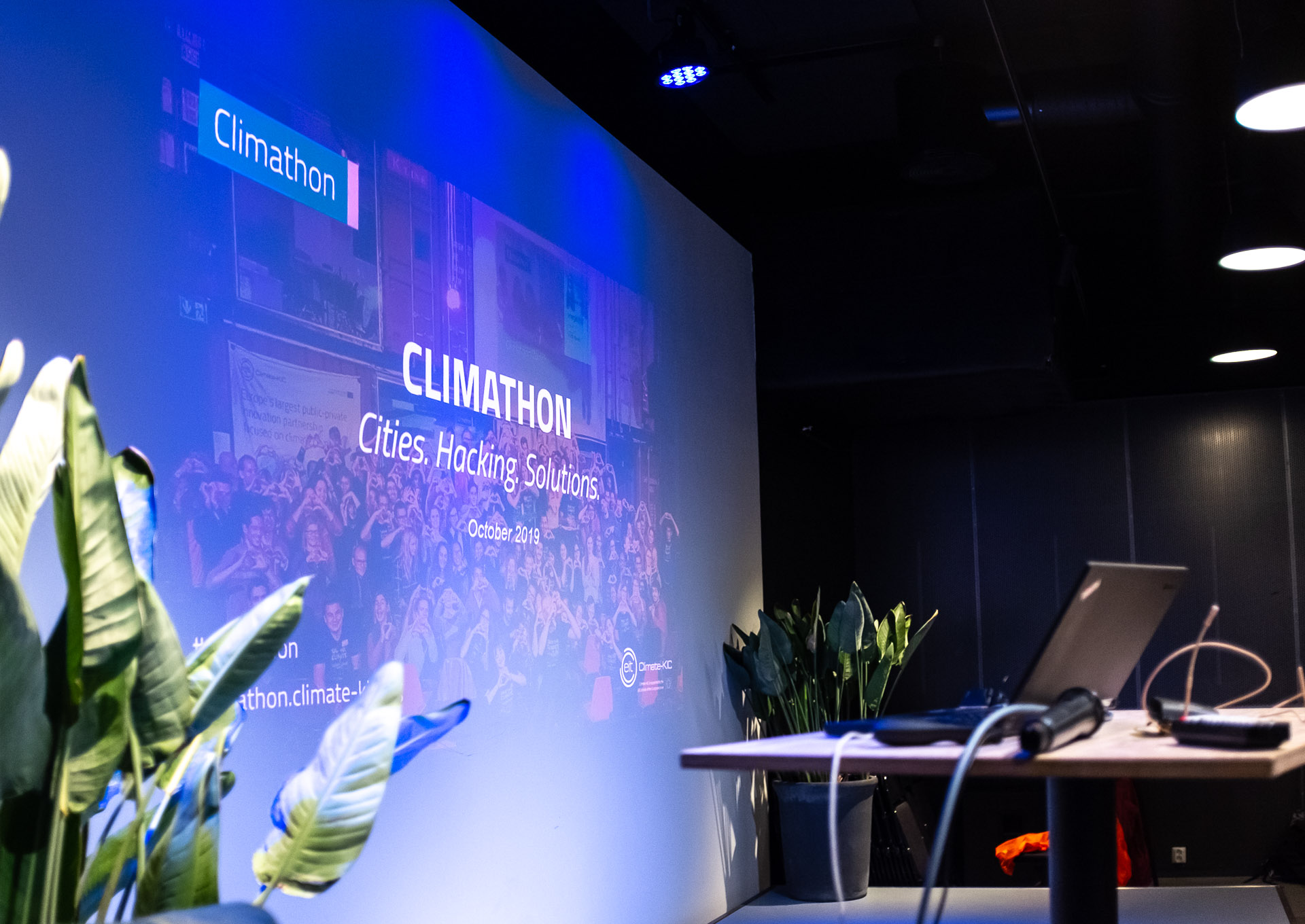
Trondheim and Limerick join the Climathon Wave 2019!

From the 25th – 26th of October, our lighthouse cities, Trondheim and Limerick, participated on the Global Climathon day. Such events aim at bringing together citizens, cities and local economies to develop local solutions to climate challenges. Both cities invited their citizens to join and cooperate with like-minded people who want to have an impact on finding new ways to help the city transition to achieve more sustainable urban ecosystems and lower their carbon footprint. 

As part of +CityxChange, Space Engagers hosted the first Limerick Climathon focusing on climate challenges faced by Limerick city. The event generated a lot of interest and innovative ideas by bringing together +CityxChange partners, university students, entrepreneurs, local government and community groups who worked in teams to develop solutions. One of the key successes of the Climathon was the co-design experience embedded in the event structure, something we hope to repeat next year. The contributions of +CityxChange partners including Limerick City and County Council, the University of Limerick, Future Analytics Consulting, Integrated Environmental Solutions, GKinetic, and Smart MPower, as well as Trondheim +CityxChange project manager, Dirk Ahlers, contributed strongly to the collaborative nature of the Limerick Climathon. The winning team, ReStory, will receive supports to develop an online portal for sharing stories on underused buildings and how to bring them back into use.

The city challenge of this year’s Climathon for Trondheim was: Citizens in Positive Energy Districts. 26 participants from 13 different countries joined Climathon Trondheim 2019. In 24 hours, they learned about the complexity of this year’s city challenge, were formed into 6 teams, talked to various mentors, got tips on pitching and design thinking and even tried some Bollywood dance. At final pitch, each team got 5 minutes to present their ideas to the jury. The winners are Nabosol (co-sharing and crowdfunding platform for solar panel installations), Co-using (community housing, a shared work and living space to reduce the climate impact from the building sector) and WeCare (the League of Energy with neighbourhoods). Click to view the program.

Three new projects join the Smart Cities and Community Lighthouse projects

We welcome the three newest SCC-01 projects: ATELIER, POCITYF and SPARCS! Find out more by clicking on the project names and have a look at the press release of ATELIER below.

ATELIER Smart City project to turn Amsterdam and Bilbao into citizen-driven Positive Energy Districts

On 1 November 2019, the Smart City project ATELIER, funded by the European Commission under the H2020-LC-SC3- 2018-2019-2020 call, is officially starting. Coordinated by the City of Amsterdam, ATELIER will focus on developing citizen-driven Positive Energy Districts in its two Lighthouse Cities Amsterdam and Bilbao, combining the expertise and the commitment of 30 partners from 11 countries.

ATELIER is all about AmsTErdam and BiLbao cItizen drivEn smaRt cities, aiming to create and replicate Positive Energy Districts (PEDs) within eight European cities. ATELIER will showcase innovative solutions that integrate buildings with smart mobility and technologies to create rather than consume energy in its two Lighthouse Cities Amsterdam (Netherlands) and Bilbao (Spain). ATELIER will thus generate an energy surplus of 1340 MWh of primary energy and save 1,7 kt of CO2 and 23 t of NOx-emissions. The Fellow Cities of ATELIER, Bratislava (Slovak Republic), Budapest (Hungary), Copenhagen (Denmark), Krakow (Poland), Matosinhos (Portugal), and Riga (Latvia), will replicate and adapt the successfully implemented solutions and thus serve as testbeds for future smart cities.

On 2 and 3 December, 30 partners working in 10 work packages will come together in Amsterdam for the official kick- off of this five-year project, thus joining the community of overall 17 Smart Cities and Communities Lighthouse projects.

“Our vision is to create dedicated PED Innovation Ateliers to strengthen the local innovation ecosystem, and to remove legal, financial or social barriers to the implementation of smart solutions”, says Frank Tazelaar, Head of Sustainability at City of Amsterdam. “The Innovation Ateliers will be self-sustaining, continuing for a long time after the project has ended, thus being engines for the upscaling and replication of solutions within the ATELIER cities and beyond (Europe and the World). Moreover, through an active learning programme, we will capture and pass along the lessons learned of our Innovation Ateliers”, he adds.

To achieve successful implementations of energy saving measures, ATELIER puts citizens at the center of all its activities: residents (<9000), local initiatives and energy communities will be included in decision-making processes and activities and will be strongly engaged in the development of the technical solutions throughout the project. Citizens will be involved in the Innovation Ateliers to create a maximum impact for the PEDs.

“With ATELIER, we really want to pave the way for more ‘positive’ cities in Europe. Therefore, each of our eight involved cities will develop a City Vision 2050 that constitutes the roadmap for upscaling solutions in the long term. The main objective of this is to guarantee a seamless city transformation from planning to implementation and further upscaling and replication”, explains Eduardo Zabala of Tecnalia Research & Innovation, leader of the City Vision 2050 work.

The ATELIER website www.smartcity-atelier.eu will go online soon but our Social Media channels (Twitter: @AtelierH2020) are already running, thus enabling ATELIER and its partners to communicate and cooperate with the Smart City community and related projects early on.

+CityxChange Second Consortium Meeting, 23-25 October 2019, Limerick

From the 23rd-25th of October, 2019, 70 representatives of the project partners, and additional local stakeholders of +CityxChange project were gathered in Limerick, as part of our second consortium meeting. Taking advantage of this face-to-face interaction, we dived into key challenges that had arise during the first year of the project implementation and and developed joint outcomes which help us to move from the development phase to the deployment phase for the second year of +CityxChange.  In total, we organised 8 in-depth workshops, each with a moderator, a problem owner, a clearly defined problem statement and an intended outcome. 

Four sessions of 2 parallel workshops each were kicked-off, covering different topics such as: 

  1. Glossary / Pictionary workshop: The aim of this workshop was to develop a common understanding and definitions of central project terms, discussing contested definitions, aligning different usage of terms across project and laying foundation for citizen-friendly definitions and visual descriptions. 
  2. Monitoring and Evaluation workshop: The development of a standardised framework for the M&E, development of a data collation, management and analysis methodology, development of an interactive web based dashboard, and providing an early-warning scoring system were the main issues to work upon
  3. Privacy and Smart City Data Model Structure:  The challenges discussed in this workshop, were related to IT architecture and data, open data portals, APIs, data protection impact assessment, informed consent, the Data Management Plan, and open research data.
  4. Exploring and sharing ways towards citizen-led energy transitions (Storytelling Workshop): The workshop aimed at exploring ways of creating a better understanding of the experiences, challenges, failures and successes of similar projects in engaging citizens as well as fostering interactive and progressive exchanges between external participants and the +CityxChange team.
  5. Common Energy Market: During the workshop, the participants reviewed status and learning points from the first year, what to expect in year 2, and how to improve learning between Lighthouse and Follower Cities. In addition, important new knowledge was discussed of how to organize a local energy market so it stimulates the PEB process, principles for the flexibility markets and community grid, as well as replication and investment / financial models and joint funding opportunities.
  6. CommunityxChange: The workshop included, amongst others, an overview of learnings from the first year, how to transition from the development to the deployment phase, as well as first experiences with monitoring and evaluation, and opportunities for investment, scaling and replication.  
  7. City Modelling: Current modeling on building level is not sufficient, and needs to be able to easier and faster work on community/neighborhood level for better scale-up into a neighborhood. This is needed to be addressed to any community for its operational performance. 
  8. Transport / Mobility: The workshop worked on different approaches to transport and mobility in Europe, depending on size, geographies, etc. The project is trying to define the basic topics firsts and then have breakout discussions.

In addition to the parallel workshops, we held the 2nd General Assembly, and organised PEB Walks of the Limerick demo areas and demo sites. On the final day, we organised an excursion to the ESB Ardnacrusha Hydroelectric Power Station, as well as the Cliffs of Moher.

For more information on our workshops check our report on Intra-Project Collaboration Including Study Visits and Peer-to-Peer Workshops