Author: Taliah Dommerholt

D9.23: Report on attendance at events held by other SCC-01 co-ordinators 9

The deliverable D9.23: Report on attendance at events held by other SCC-01 co-ordinators 9 was submitted by NTNU in June 2023 with contributions from R2M, OV, and ISOCARP. The executive summary of the deliverable is available below and the full deliverable is at the end for download:

“+Cityxchange collaborates with other EU platforms, projects and initiatives to facilitate and exchange good practices. This report provides an overview of of the participation of +CityxChange and partners in events organised by Smart Cities and Communities Lighthouse (SSC) projects, their Board of Coordinators and Task Groups, the Scalable Cities secretariat, the Smart Cities Marketplace (SCM), the EU Cities Mission, the NetZeroCities Platform, New European Bauhaus, and the EERA Joint Programme Smart Cities from November 2022 to April 2023 (M49-M54).

This report is part of Work Package 9 “Inter-Project Collaboration and Clustering” connected to +CityxChange task 9.2 on Extra-Project Cooperation through other SCC01 projects and EU platforms, in Work Package 9 “Inter-Project Collaboration and Clustering”. This report compliments Deliverable D9.21 “Report on Intra-Project Collaboration Including Study Visits and Peer to Peer Workshops 9”.

D9.22: Report on Intra-Project Collaboration, Including Study Visits and Peer-to-Peer Workshops 9

The deliverable D9.22: Report on Intra-Project Collaboration, Including Study Visits and Peer-to-Peer Workshops 9 was submitted by NTNU in June 2023 with contributions from UL, TK, SMO, R2M, OV, MAI, and MP. The executive summary of the deliverable is available below and the full deliverable is at the end for download:

“This report provides an overview of the study visits, peer-to-peer workshops, and other intra-project learning activities performed by the Lighthouse and Fellow Cities and the other partners in +CityxChange, between 1 November 2022 and 30 April 2023 (M49-54). During the months 49-54, cities participated in events and meetings to celebrate and share the accomplishments of their efforts and discuss challenges. In addition, Learning Sessions were prepared and performed in four of the Fellow Cities, contributing to the learning process and knowledge sharing of the project.”

University of Limerick campus accommodates first Electric Car Sharing Vehicle

In Limerick, +CityxChange partners are exploring eMobility. Recently, the University of Limerick and GoCar agreed to provide a parking space and permit in the busy UL campus car park for an electric car sharing vehicle, a Hyundai Kona with a 64 kWh battery. The car park is already equipped with an ESB 22kW Type 2 / AC43 dual port electric vehicle charge point, and the shared EV will be available to the public from February 2023 until the end of the project.

eMobility as a Service (eMaaS) is a concept that involves the use of technology to support integration and multi-modal electric vehicle travel. It represents the transition away from depending on personally-owned transport to a model based on mobility provided as a Service. eMaaS hubs create additional e-mobility types for users with the inclusion of electric bike share and in some markets also electric scooters (while currently e-scooters are not legislated for in Limerick or Ireland yet).

Check out the latest deliverable, D4.5: eMobility in Limerick DPEB Implementation Guide, to learn more about what has been accomplished. This report describes and details:

  • The implementation of the +CityxChange Limerick project, and it demonstrates Seamless eMobility, including an eMaaS scheme with proposed V2G integration in Limerick City.
  • The different actors involved, their roles and responsibilities and the proposed electric Car Sharing scheme and its vehicles deployed.
  • The barriers encountered which prevented full implementation of the task.
  • Important experiences and learning points.

In the photo above, Chris Fogarty, Energy Manager/Quality Team Leader at University of Limerick is pictured with Mantas Valasinas, GoCar representative for Limerick at the handover of “GoCar UL 3’.

D4.5: eMobility in Limerick DPEB Implementation Guide

The deliverable D4.5: eMobility in Limerick DPEB Implementation Guide was submitted by GoCar Ireland in July 2023 with contributions from LCCC, ESB, ESBN and FourC. The executive summary of the deliverable is available below and the full deliverable is at the end for download:

“This report describes and details:

  • The implementation of the +CityxChange Limerick project demonstrates Seamless eMobility, including an eMaaS scheme with proposed V2G integration in Limerick City.
  • The different actors involved, their roles and responsibilities and the proposed
    electric Car Sharing scheme and its vehicles deployed.
  • The barriers encountered which prevented full implementation of the task.
  • Important experiences and learning points.

eMobility as a Service (eMaaS) is a concept that involves the use of technology to support integration and multi-modal electric vehicle travel. It represents the transition away from depending on personally-owned transport to a model based on mobility provided as a Service. eMaaS hubs create additional e-mobility types for users with the inclusion of electric bike share and in some markets also electric scooters (while currently e-scooters are not legislated for in Limerick or Ireland yet).

The addition of V2G chargers at the eMaaS hubs would allow EV car sharing to utilise additional discharging capabilities of compatible EVs such as the Nissan Leaf. Discharging multiple EV car share Nissan Leaf’s could contribute with energy, capacity, and flexibility to the local markets and Positive Energy Blocks (PEBs) in Limerick.

Based on the Seamless eMobility system developed by +CityxChange partner FourC with first rollout in Trondheim, the app backend as well as the frontend was developed and expanded to include all public bus and train timetables as well as GoCar locations for Limerick. The FourC backend is a functioning MaaS platform as of today.

Different locations were reviewed for locating eMaaS hubs and V2G charger. With many different private and public bodies associated with each proposed site, getting the required approval from each body was extremely difficult and hubs did not materialise. Learnings are informing Limerick’s EV strategy currently in development.

An e-Mobility hub without a V2G charger was created in the grounds of University Limerick (UL). UL and GoCar agreed to locate a shared Hyundai Kona with a 64 kWh battery at one of UL’s car parks already equipped with an ESB 22kW Type 2 / AC43 dual port electric vehicle charge point. The shared EV is available to the public since February 2023 and will be until the end of the project.

Follower Cities Publish Report on Community Participation and Playground Results

The +CityxChange Follower Cities (FCs), Alba Iulia, Písek, Smolyan, Sestao, and Võru, recently published the Report on community participation and playground results, in collaboration with partners from Space Engagers, Colaborativa and Officinae Verdi.

One of the core objectives of the +CityxChange project is to activate local stakeholder knowledge and resources towards the creation of Distributed Positive Energy Blocks (DPEBs). In this report, the FCs outline how they have adapted and applied principles of CommunityxChange throughout the project, based on the experiences and lessons learned from Lighthouse Cities, Limerick and Trondheim, and their own background.

Key lessons and recommendations from the municipalities’ experiences in community participation and engagement initiatives are as follows:

  1. Informative sessions: Organizing informative sessions on various topics, such as community, city, sustainability measures, renewable energy, and localizing SDGs, is crucial for citizen education and awareness.
  2. Continuous communication & transparency: Maintaining open and continuous communication with citizens, along with transparency in decision-making processes, helps build credibility and trust. Sharing open data further enhances transparency and enables others to replicate successful initiatives.
  3. Face-to-face activities: Proactive engagement through face-to-face activities, narrative tours, and gamification demonstrates a genuine interest by the municipality in connecting with citizens and fostering meaningful interactions.
  4. Stakeholder diversity: Involving a diverse range of stakeholders, such as private companies, universities, residents, youth organisations and community groups, is essential for facilitating effective and sustainable change within the community.
  5. Feedback & improvement: Collecting feedback from citizens after each community collaboration and co-creation event is important to continuously improve the quality and impact of such activities.
  6. Centralizing open calendars: Consideration should be given to utilizing an online tool for sharing calendars, future community participation initiatives, and engagement plans. This can help streamline communication and ensure accessibility to information for all stakeholders.
  7. Local heritage & culture: Recognizing and valuing the cultural heritage and traditions of a community can foster a sense of pride and ownership among residents, making them more likely to support and actively participate in sustainability efforts. By integrating local heritage and culture, municipalities can leverage traditional knowledge, practices, and architectural styles that align with sustainable principles. This approach not only preserves the unique identity of the community but also showcases the compatibility between cultural heritage and climate action.

By implementing these lessons and recommendations, municipalities can enhance their community engagement strategies, foster citizen participation, and drive positive change within their communities.

Check out the full deliverable to learn about what each city has been doing in further detail and as always, pay a visit to our Knowledge Base for complete access to project results.

D4.13: Limerick Energy Trading Market – Implementation Report

The deliverable D4.13: Limerick Energy Trading Market – Implementation Report was submitted by MPOWER in June 2023. The executive summary of the deliverable is available below and the full deliverable is at the end for download:

“This deliverable documents the main features of the enerXchangeTM trading platform along with the explanation of the Trading algorithm and Prosumer interface that was developed to control energy/flexibility trading and to manage Local Flexibility Market (LFM).

At the core of the Community Grid concept and establishment of the Local Flexibility Market in Limerick is a Community System Operator (CSO). As described in D2.6:

“A CSO contracts flexibility from end-users within the Community Grid and uses that flexibility to provide disturbance neutrality for the Community Grid.”

For the operation and inclusion of the CSO in the existing energy market share on local level as an equal and acceptable entity it needs appropriate licence. For the project purpose and demonstration, MPOWER took a role of the CSO and obtained Electricity Supply Licence (Appendix A).

This concept for a new entrant was supposed to be examined in the project and the new entity set up through MPower to operate the local energy market on a pilot basis for the duration of the project under supervision of the DSO but no acceptable way was found for the formation of this new entity.

Without a Community System Operator it was not possible to form a Local Energy or Flexibility Market. The necessary regulatory mechanism for the formation of the Local Flexibility Market in Limerick was defined in Deliverable D2.1 and could not be implemented. The reasons for that are explained more in detail in Deliverable D4.12.

No energy trading market or physical trades between prosumers have been achieved during the timeline of the project. All the SLUs currently installed can only meter the energy consumption of the prosumers with no energy assets to control for the moment. In addition, there is no legal mechanism that allows it to be done in Ireland. However, the data collected can be used to simulate the trade that could occur if energy transfer were possible.

The report further presents simulation results which was the first phase in demonstration strategy. The next phase would be laboratory demonstration. After that would come the proof of concept demonstration in which prosumers are meant to be included in the demonstration. When this step would be successfully completed, it would go into production demonstration.

D6.5: Report on community participation and playground results

The deliverable D8.4: Report on IPR protection plans, agreements and exploitation plans was submitted by Space Engagers (SE), Colaborative (COL), Officinae Verdi (OV), Písek (MP), Smolyan (SMO), Sestao (SB), Võru, and Alba Iulia (AIM) with contributions from NTNU and ISOCARP Institute in June 2023. The executive summary of the deliverable is available below and the full deliverable is at the end for download:

“One of the core objectives of the +CityxChange project is to activate local stakeholder knowledge and resources towards the creation of Distributed Positive Energy Blocks (DPEBs) and the broader market in all five Follower cities: Alba Iulia, Písek, Sestao, Smolyan and Võru. The focus of this Report is on describing the activities that have ensured replication of the Demonstration Projects that have been carried out in the Lighthouse cities in this regard. This includes implemented citizen and stakeholder engagement measures, innovation playgrounds, and development of business and investment models.

CommunityxChange principles are expressed in six Frameworks. The Bold City Vision is a Framework that helps cities identify and address key opportunities and actions on their way towards becoming smarter and more sustainable. A Citizen Participation Playbook is a catalogue of practices to empower communities to contribute to the Positive Energy transition. A Learning Framework for Next Generation Smart Citizens is an infrastructure for intergenerational learning initiatives and learning events with youth participation in Distributed Positive Energy Blocks (DPEBs) at its core. A Framework for Positive Energy Champions supports a network of individuals who foster positive energy communities by incorporating positive energy concepts into their daily routines and help their fellow citizens to do so too. A Framework for Innovation Labs supports the implementation of dedicated centres for digital innovation within a city, and enhancement of existing centres, where they exist. As described in D3.6, Framework for DPEB Innovation Labs, (p 8): “It comprises a Programme and virtual and physical locations, or a network of locations, where implementation of the +CityxChange Innovation Playground can become manifest” with objectives to :

  • “Initiate new collaborative operating structures.
  • Cultivate an Open Innovation 2.0 ecosystem for entrepreneurs and start-ups.
  • Support competition and innovation in the creation and replication of DPEBs.
  • Enable a permeable culture of collaboration and co-creation in the city”

and includes orchestration of the Innovation Playground. The Framework for Innovation Playgrounds supports the development of an area of a city where different virtual and physical places and activities related to innovation are brought together into a coherent whole to facilitate collaboration, empower citizens, and find new ways of addressing challenges that matter to people.

These Frameworks, as well as learnings from the application and adaptation of the frameworks in the LHCs, were used in a targeted way towards the implementation of PEBs and the related transition processes with citizens and other stakeholders, and this Report describes how that implementation happened in Alba Iulia, Písek, Sestao, Smolyan and Võru. The Report begins in each city by reporting on community participation, within the broader CommunityxChange approach, and then moves to considering the implementation of the Framework for Innovation Playgrounds locally in the five distinct cities. Implemented Business and Investment models are reported for all five cities.

In describing the overall application of CommunityxChange principles, as set out in CommunityxChange results, it is intended that this Report could be used by other cities in a targeted way towards the implementation of PEBs and the related transition processes with citizens and other stakeholders. Results of community participation and engagement in implementing Bold City Vision, Citizen participation platforms, Learning Framework for Next Generation Smart Citizens, Framework for Positive Energy Champions and Framework for Innovation Labs demonstrate the level and quality of engagement and participation in each city. Description of implementation of Innovation Playgrounds in five Follower Cities, and testing of business and investment models, also records the spatial and socio-economic framework developed for each city in the period from April 2020 to April 2023.”

D8.4: Report on IPR protection plans, agreements and exploitation plans

The deliverable D8.4: Report on IPR protection plans, agreements and exploitation plans was submitted by Research2Market (R2M) with contributions from IESRD, IOTA, POW/VOLUE, LCCC, TK, GKIN, COL, and NTNU in May 2023. The executive summary of the deliverable is available below and the full deliverable is at the end for download:

“This report presents an updated overview of the exploitable results of the +CityxChange project identified during the first fifty-four months of the five-year project and builds upon the work presented in Deliverable 8.2 “Report on the identification and assessment of exploitable result”1. This work has been conducted as part of Work Package 8: Scaling-up, Replication and Exploitation and specifically as part of Task 8.5 “Exploitation, IP protection and agreements”. The report provides an overview of the plans for adoption and exploitation of results generated by the +CityxChange project and the arrangements for the protection and management of the IP developed in the project. As such, it provides a framework for identifying, developing, and optimising the exploitation of the project results during the project and after its completion.

Twenty-six exploitable results have been identified which are summarised under four
categories: 11 Products & Applications, 2 Services, 8 Knowledge & IP, 3 Processes, and 2 Other (Policies). Compared to D8.2, two new results have been identified (ER26 – “PEB Policies Recommendations” and ER27 – “Integrated Investment Models for PEBs”) and one result has been marked as duplicate (ER15 – “PED Planning and Design Process”). It is envisioned that 14 of the results will be exploited on a commercial basis and the remaining 12 results will be made available for public or scientific exploitation for free, under appropriate open licences, or similar paths.

Together, the results cover the technical, social, economic and cultural aspects of a PED, both individually and in an integrated manner, reflecting the complexity and collaboration needs of PEBs. For example, the Local Energy Market combines the various technologies developed in the project to enable local energy and flexibility trading. Equally important are the process- and engagement related results like the Innovation Lab, Learning Framework, Bold City Vision, and regulations that set the conditions for the PED framework.

For each of the exploitable results, together with the ER Manager, a KER Assessment has been performed. The results have been used to categorise the results across expected impact and innovation risk and to further detail the exploitation- and IP management strategy. The results are distributed across four categories: 2 Rising Star, 12 Promising Concept, 3 Niche Opportunity, and 9 Safe Play. The levels of maturity vary across the exploitable results and the effectiveness of the results will be validated during the +CityxChange demo projects.

It can be expected that the methods and products developed in +CityxChange will contribute to the adoption of PEDs/PEBs and can be of great benefit for all stakeholders involved. This report forms the basis for the commercialisation plans that will be delivered in Month 60.”

Children’s Designathon held in Smolyan

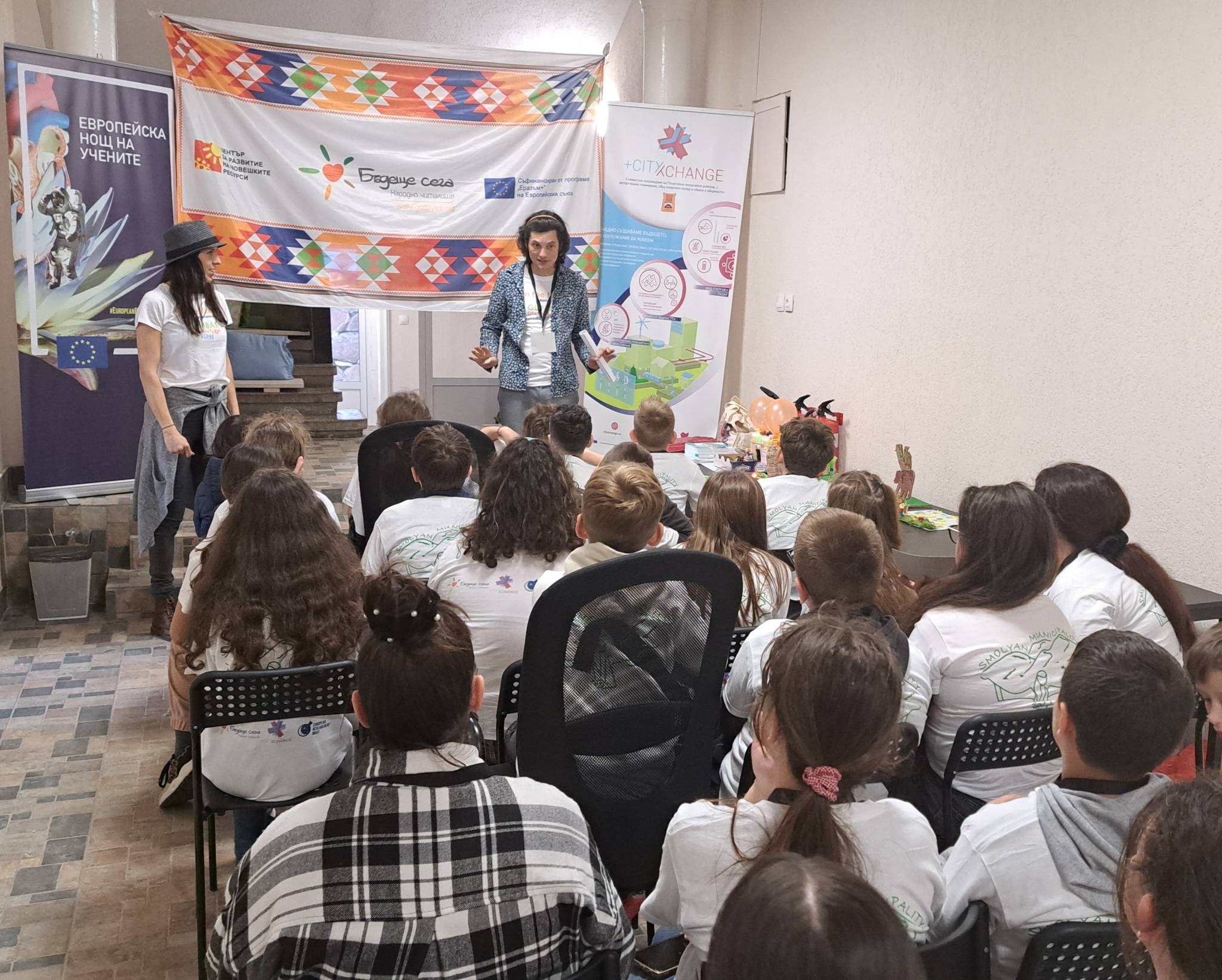
On the 25th of March, Sky Hub Smolyan welcomed 25 children to participate in the city’s first Designathon, part of the Global Children Design Marathon (Global Children Designathon). The event was organized by Community centre “Future now” in partnership with the Municipality of Smolyan as part of the initiative Next generation Smart Citizen.

Global Children Designathon is an annual event, which uses design and hands-on learning to encourage students from all over the world to think creatively about the issues related to the SDGs. The topic of this year events was Restoring Biodiversity, encompassing SDGs 4, 11, 13, 14 and 15.

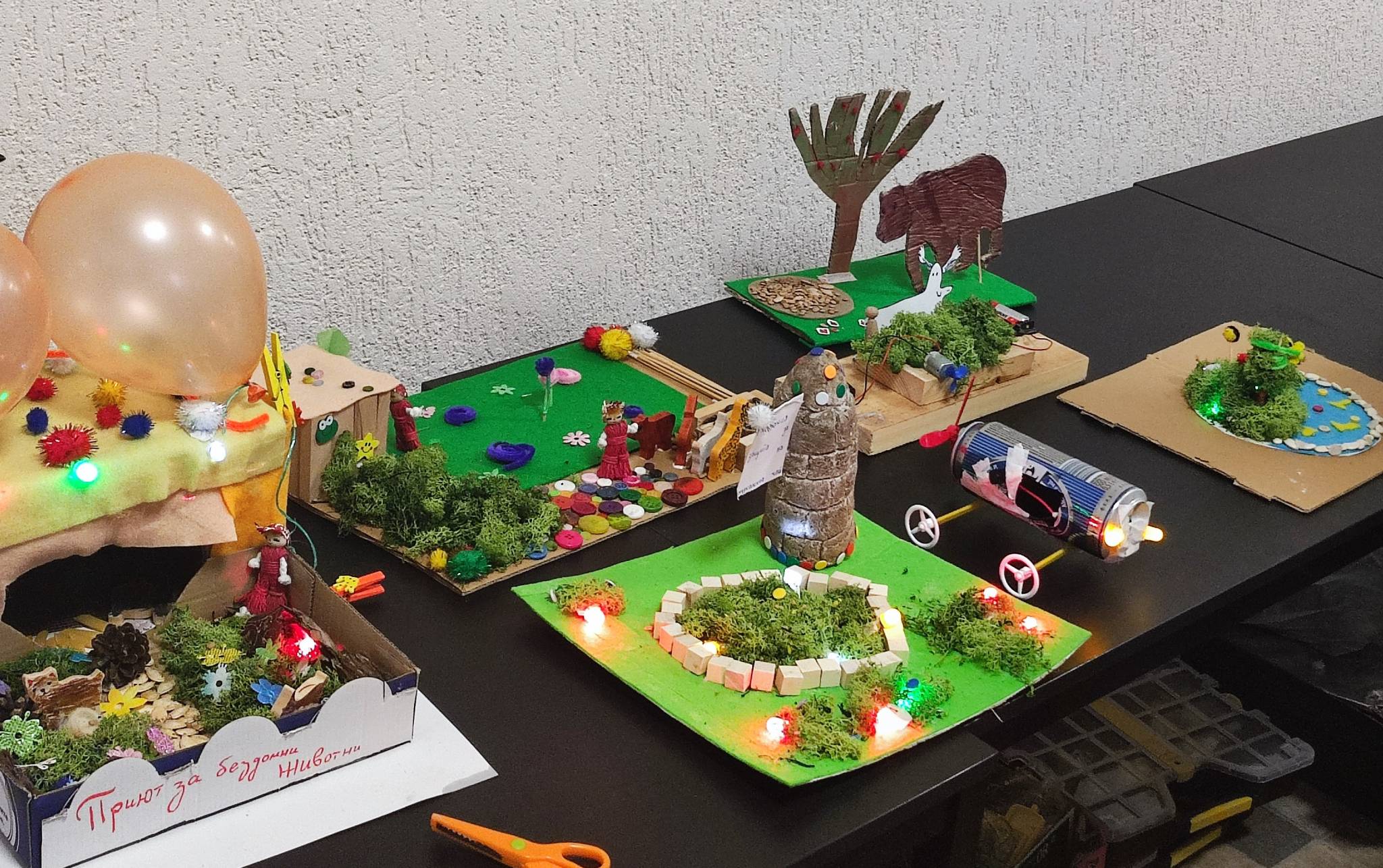
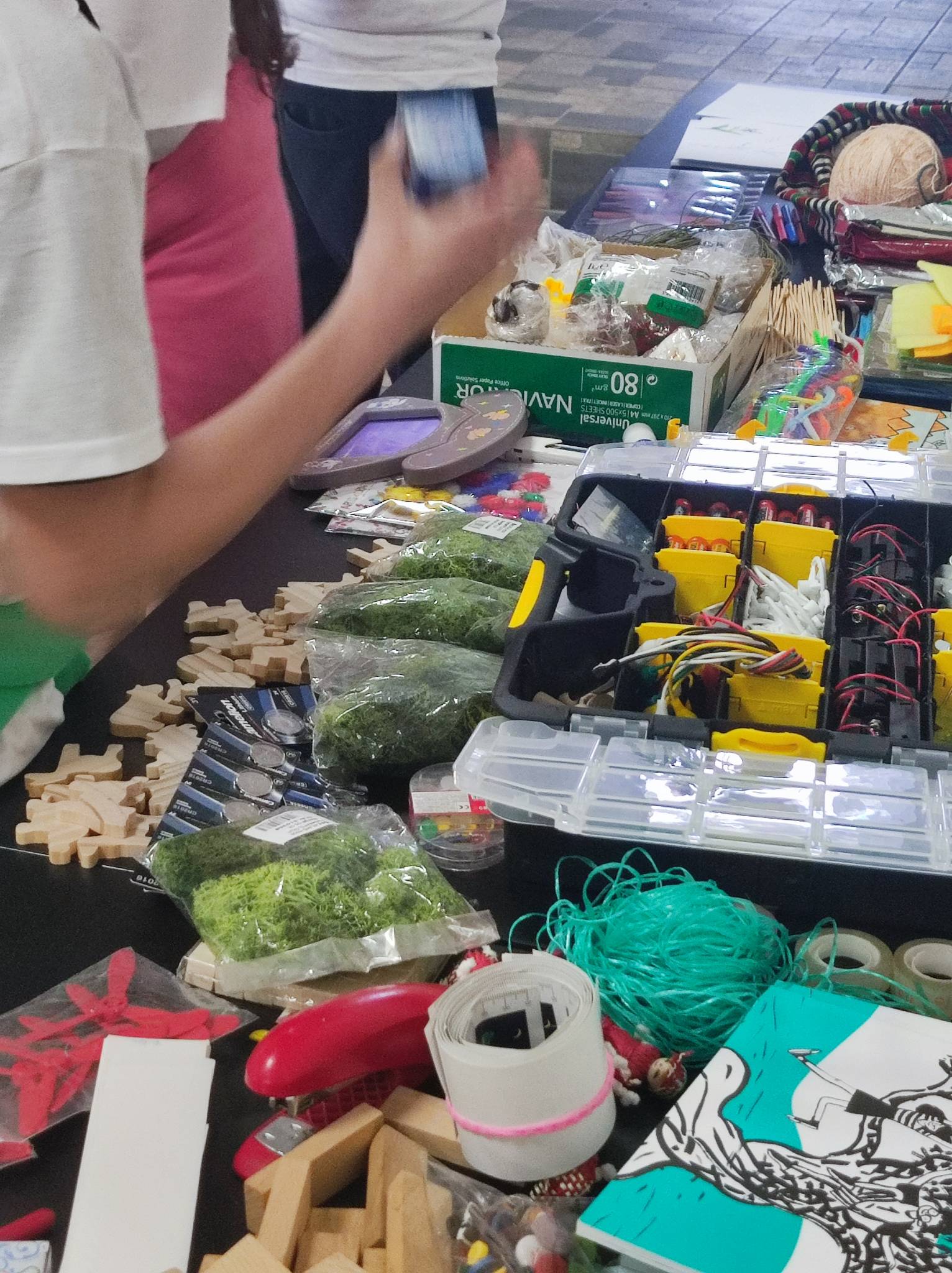
The Designathon method is a unique and effective method for developing thinking and communication skills in children (aged 7-12), such as creative and critical thinking, technological literacy, empathy and cooperation. Children work in small teams to come up with creative solutions to real-world problems. During the design marathon, they brainstorm ideas and create prototypes using materials ranging from cardboard and glue to sensors and other electronic components. Children work with special construction kits and take on the role of real designers of the environment in solving the problems of the modern world. During the event, a thinking methodology that develops functional literacy is used.

8 teams participated in the Designathon Smolyan 2023. They had the opportunity to present their solutions and exchange ideas with teams from South Africa (via teleconference). The solutions created included a machine for underground watering, a forest reserve for European fallow deer, conservation nurseries for local rare species, and a conservation project for the bees’ population.

See the news post in Bulgarian on the Smolyan municipal website here

Smolyan’s successful bid for EUCF

The city of Smolyan is very happy to announce that in December 2022 it became one of the beneficiaries in the 4th call of the European City Facility (EUCF) grant.  

The main objective of the proposed project is to expand the concept of PEBs that have been developed during the implementation of the +CityxChange project, and to create a Positive Energy District (PED) encompassing the administrative centre of the city, the Cultural Complex and the surrounding residential area. The concept includes introducing EE measures and RES for self-consumption, as well as possible P2P trading in a large number of public and residential buildings within the city. It also includes a feasibility study for Smart Grid development and implementation, and the transition to Green City Mobility.

If fully realized, the project is expected to achieve a CO2 emission reduction of 35499.36 t CO2eq/year, total energy savings of 83.260 GWh/y and energy production from RES of 22.2 GWh/y. In addition, the project will improve the urban environment and revitalize the area and will strengthen the relationship between local communities, businesses and institutions.